Mustafa Temiz, CPA
The person who answers the phone is the person who prepares your return.
Texas CPA licensed 2009 · IRS Certifying Acceptance Agent · Master's in accounting, UT Dallas 2007
The person who answers the phone is the person who prepares your return.
Texas CPA licensed 2009 · IRS Certifying Acceptance Agent · Master's in accounting, UT Dallas 2007
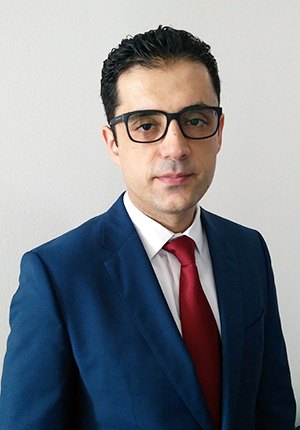
Mustafa Temiz, CPA
Richardson, Texas
Temiz CPA PLLC is a licensed Texas CPA firm in Richardson, serving American, Turkish and international taxpayers. Most of its work sits where United States tax law meets another country's — foreign-owned entities, nonresident filings, and Americans whose assets did not stay inside the country.
It is a small practice and it is meant to be. One licensed accountant takes the call, forms the judgment and signs the return. There is no account manager between you and the person doing the work, and nothing is routed to an associate you never meet.
That scale is also the limit, and it is stated openly further down this page: there is work this firm takes and work it turns away.
Mustafa Temiz began his career at a global public accounting firm after completing a master's degree in accounting at the University of Texas at Dallas in 2007. He was licensed as a Certified Public Accountant by the State of Texas in 2009.
As a financial auditor and business consultant he worked with clients across financial institutions, healthcare, airlines, manufacturing, telecommunications and construction — businesses whose numbers are examined by people whose job is to find the weak point.
That background does a specific thing for a tax practice. An auditor spends years learning where figures drift, which explanations survive scrutiny and which collapse on the second question. Preparing a return is the same skill pointed the other way: taking positions that will still stand up when someone examines them three years from now.
A return is a document you sign under penalty of perjury. The useful question is not whether a position can be entered into the software, but whether it can be defended once entered. Those are different questions, and only one of them matters later.
This side of the practice grew through demand, not marketing. Three kinds of people arrived with the same problem.
Founders who had formed a U.S. LLC from abroad, filed nothing because the company had no activity, and had no idea that Form 5472 carries a $25,000 annual penalty whether the company trades or not. Green card holders whose accounts back home stayed open, unaware that FBAR thresholds count the total rather than each account. Foreign investors holding U.S. property who met FIRPTA withholding at closing and had never heard the word.
In every case the tax owed was modest or nothing at all. What was expensive was the reporting nobody had mentioned. That gap — between what people are told and what the law requires of them — is what this practice is organized around.
Everything on this site that matters can be checked by someone other than us. It should be — and you should apply the same two checks to anyone else you are considering.
A firm this size can only do a limited number of things properly. Saying which is more useful than claiming to do everything — and it saves you a call if the answer is no.
Where a licensed, cross-border-literate accountant changes the outcome.
Declined at the first conversation, before anyone has paid anything.
A conversation before the year closes can change what you pay in April. Held in January, the same conversation is only a diagnosis.
If a report was missed the position is clearer still: the voluntary disclosure programs can reduce penalties substantially and sometimes remove them altogether. The single condition is coming forward before the IRS contacts you. The moment an examination opens, that door closes.
In both cases the deciding factor is the same one: timing.
Free, about half an hour, and nothing follows from it — if your situation is not a fit for us, we will say that plainly too.